Eco-Friendly Sleep
The Sustainability Story of Natural Latex
By Bedding Houz | Bedding & Sleep Education | 5 min read
Introduction
Sustainability is no longer a marketing add-on it is a purchasing criterion. From the materials in a product to the practices of the factory that made it, today’s consumers and corporate buyers want to know the full story behind what they bring into their homes and businesses. In the world of bedding, natural latex stands out as one of the most genuinely sustainable materials available. But what does that actually mean and how do you separate real sustainability from greenwashing ?
In this post, we trace the full sustainability story of natural latex from the rubber tree to the finished product and explain why Bedding Houz is committed to manufacturing that respects both people and the planet.
It Starts with the Rubber Tree
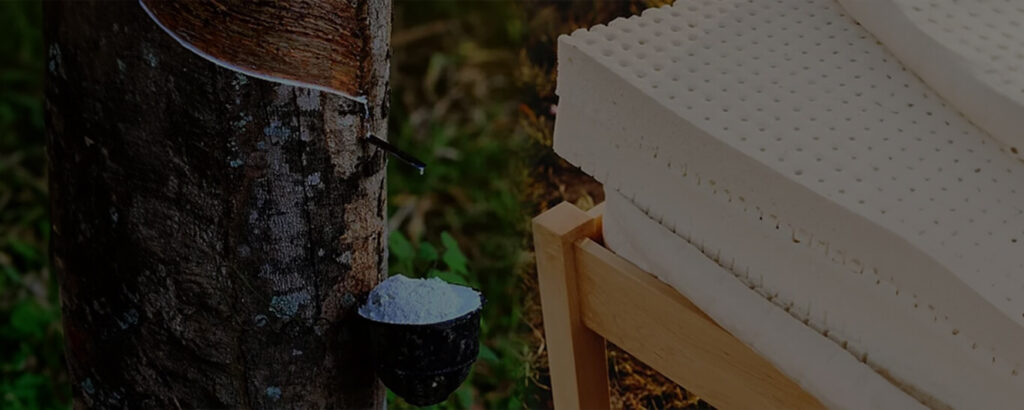
Natural latex comes from the Hevea brasiliensis rubber tree, a tropical species native to South America and now cultivated extensively across Southeast Asia including in Southern Thailand, where Bedding Houz sources its raw latex. The rubber tree is, at its core, a renewable resource. A single tree can be tapped for latex for up to 30 years without being cut down, producing sap continuously through a process that does not harm the tree. During their productive years, rubber trees actively absorb carbon dioxide contributing to carbon sequestration in plantation ecosystems. The International Rubber Research Organisation estimates that rubber plantations absorb millions of tonnes of CO2 globally each year, making them a meaningful part of tropical carbon management.
Biodegradable by Nature
Unlike synthetic foam, memory foam, or polyester-based bedding materials all of which are petroleum derivatives that persist in landfill for centuries natural latex is fully biodegradable. At the end of its product life, a natural latex mattress core or pillow will break down naturally without leaving toxic residues in the soil or water supply. For brands and consumers thinking about the full lifecycle of a product, this distinction matters enormously.
The Dunlop Process : Low Energy, High Integrity
The manufacturing method used to convert latex milk into foam also has significant environmental implications. At Bedding Houz, we use the Dunlop process the original and most energy-efficient method of latex foam production. Developed in the 1920s, the Dunlop process involves minimal chemical additives, uses lower processing temperatures, and produces less manufacturing waste compared to the Talalay process. The result is a denser, more durable foam produced with a smaller environmental footprint a material that lasts longer and costs the planet less to make
EUDR Compliance : No Deforestation, No Exceptions
One of the most critical sustainability concerns in natural rubber sourcing is deforestation. In recent years, the expansion of agricultural land including rubber plantations has been linked to the destruction of tropical forests in parts of Southeast Asia and South America. The EU has responded with the EU Deforestation Regulation (EUDR), which requires that products placed on the European market are not associated with deforestation or forest degradation. Bedding Houz is fully EUDR compliant. All latex sourced for our products comes from legally managed, verified deforestation free plantations. This is not simply a regulatory requirement for us it is a commitment to responsible sourcing that we maintain regardless of market mandates.
GOLS Certification : Organic from the Ground Up
The Global Organic Latex Standard (GOLS) is the world’s leading certification for organic latex products. To achieve GOLS certification, latex must be sourced from certified organic rubber plantations free from synthetic pesticides and fertilisers and the entire production chain, from harvesting to finished product, must meet strict environmental and social criteria.
Bedding Houz holds GOLS certification across our product range, providing customers and OEM partners with verifiable assurance that our latex is genuinely organic and sustainably produced not simply labelled as such.
ECO Institut & TÜV LGA : Safe for People and Planet
The Global Organic Latex Standard (GOLS) is the world’s leading certification for organic latex products. To achieve GOLS certification, latex must be sourced from certified organic rubber plantations free from synthetic pesticides and fertilisers and the entire production chain, from harvesting to finished product, must meet strict environmental and social criteria.
Bedding Houz holds GOLS certification across our product range, providing customers and OEM partners with verifiable assurance that our latex is genuinely organic and sustainably produced not simply labelled as such.
Sustainability as a Brand Value, Not a Badge
At Bedding Houz, sustainability is embedded in how we operate not applied as a label after the fact. From the plantations we source from, to the manufacturing process we use, to the certifications we maintain and the compliance standards we uphold, every decision reflects a genuine commitment to doing things the right way. For OEM partners and brands building eco-conscious product lines, this means you are not just buying a latex component you are accessing a fully documented, certified, and verifiable sustainability story that you can communicate with confidence to your customers.
Conclusion
Natural latex is one of the few bedding materials that is simultaneously high-performing, long-lasting, health supporting, and genuinely sustainable. From the renewable rubber tree to the biodegradable finished product, the environmental credentials of natural latex are real, measurable, and independently certified. At Bedding Houz, we believe that the best sleep products should be good for the people who use them and the world they live in. That belief is at the heart of everything we make.